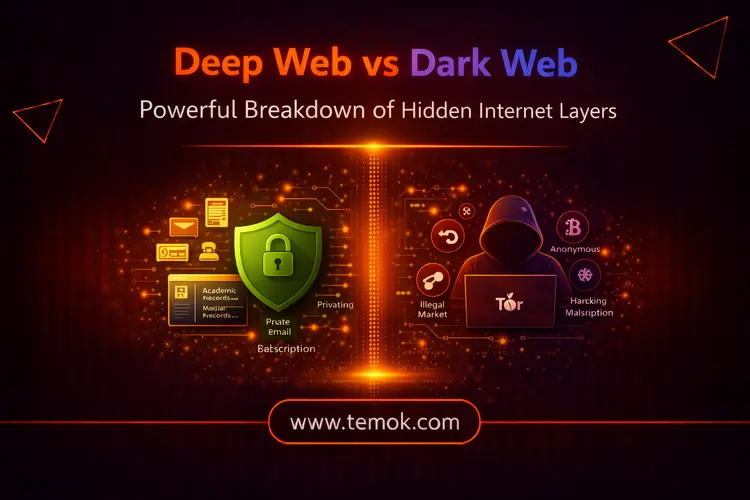

The deep web refers to any section of the internet that regular search engines do not index, and it accounts for about 90% of all online content. Moreover, the Dark Web is a secret and encrypted sector of the Deep Web, making up just roughly 6% of all online content.
Introduction
The websites we regularly visit are only a small portion of the enormous quantity of stuff that is easily available online. The properties and methods of access of the many levels that make up the internet vary.
Deep web vs dark web are often used synonymously, however there are a few important differences that define them differently.
The deep web contains content that is inaccessible to ordinary users, such as databases, paywalled websites, secret business websites, and medical records. On the other hand, content on the dark web is usually purposefully kept secret and requires particular software, like the Tor browser, to access.
Keep reading and exploring to learn the amazing facts about the deep and dark web. Moreover, we will also discuss key dark web vs deep web differences so that you can clearly understand the distinction between the two.
Deep vs Dark Web: Understanding the Secret Websites
Before we get into the main dark web vs deep web comparison, let’s look at the explanation of both internet layers to better understand what they are first.
What is the Deep Web?
In a nutshell, the deep web is most of the internet. It refers to all websites that are not indexed by for-profit and important search engines like Google or Bing, rather than a specific location. You cannot find these pages with a straightforward search query because they are not indexed.
Why is so much of the internet “hidden” in this way? For quite legitimate and essential reasons. Many sites are purposefully kept out of search engines by logins, paywalls, robots.txt, or “noindex” tags, and access to this deep web information is typically limited by authentication or other restrictions.
- The deep web contains your online bank accounts, cloud storage, social media direct messages, and email inbox. They can’t be displayed publicly since you need a password to view them. Therefore, understanding deep web vs dark web is necessary.
- For preserving confidentiality and privacy, government portals, academic databases, and digital medical information are all kept on the deep web.
- Businesses store their employee directories, project files, and internal communications on the deep web, where only employees can access them.
- The deep web includes scholarly papers and subscription-based streaming services that conceal their content behind a paywall.
Every day, you use your regular browser to surf the deep web. It is the foundation of a functional, private internet.
Also Read: What is The Deep Web: The Essential Guide To Understanding Hidden Networks
What is the Dark Web?
The hidden part of the internet, known as the “dark web,” is only accessible with specific programs like I2P (Invisible Internet Project) and Tor (The Onion Router). These technologies anonymize user traffic by routing it via a number of encrypted nodes, making it impossible to track identities or locations.
Although the dark web was first created to benefit journalists, whistleblowers, and dissidents by offering an encrypted and anonymous network, it has also turned into a marketplace for cybercriminals. It has gained popularity for offering unlawful stuff, including passwords, narcotics, and stolen data.
Although the dark web has a direct link with illegal activity, it also fulfills several lawful functions that are essential to security, privacy, and free speech. Here are a few acceptable uses for the dark web before we discuss deep web vs dark web in detail:
- Privacy protection: People who have concerns about corporate monitoring or government spying may use the dark web to remain anonymous. They may share private information without being seen by outsiders thanks to it.
- Intelligence gathering: Researchers and cybersecurity experts frequently use the dark web to gain information about new dangers, cybercrime activities, and illegal market trends. This understanding can influence better security procedures and regulations.
- Political activism: Particularly, activists in oppressive nations utilize the dark web to covertly share content. This is essential for defending their identity and security as well as promoting social justice and human rights.
With thousands of sites, the deep web only makes up around 0.01% of the deep web.
Now that you have learned about what is the deep web and dark web, let’s discuss difference between deep web and dark web in reality.
Also Read: What is The Dark Web: Smart Insights Into Myths, Risks, and Anonymity
Deep Web vs Dark Web: Understanding the Key Difference

Here are the key dark vs deep web differences for your better understanding:
1. Total Size
The size contrast between the dark web vs deep web is striking. The dark web is a considerably smaller portion of the internet that is purposefully concealed. In contrast, the deep web contains the majority of online data, including databases, dynamic websites, and private services.
Reputable sources concur that the dark web makes up a very minor portion of the deep web, exact figures are unreliable for both. Because neither place can be completely explored or quantified, size frequently gets twisted in conversations about the deep web vs dark web.
The amount of stuff created on the fly is what increases the deep web’s footprint. Numerous academic databases, corporate systems, and SaaS applications only provide results upon user inquiry or login, resulting in web pages that are inaccessible to search engines.
2. Availability
You probably use the deep web on a regular basis to access private accounts such as Gmail, your banking details, or even streaming services, including Netflix or Disney+.
However, to access the dark web, you need certain software, primarily Tor, which conceals your identity and gives you access to websites with .onion extensions. These websites have no indexing on surface web search engines. Therefore, you need the right tools to browse it securely and discreetly.
Also Read: Safe Web Browsing: Defending Against Phishing Attacks
3. Purpose
The deep web provides a platform for common actions that require greater privacy than a public website, such as monitoring your bank information or reading personal communications. The anonymity of the dark web attracts users who want private conversation, wish to transmit sensitive information, or need access to content that is restricted in specific locations.
However, it is also a hub for illegal operations, even if it may facilitate legitimate reasons such as journalism or whistleblowing. Criminals use it to do unlawful acts, steal identities, and buy and trade stolen data.
4. Security level
The majority of deep web websites utilize encryption to protect user data and maintain transaction privacy and require login credentials, frequently with two-factor authentication. The deep web is, therefore, comparatively safe while comparing deep web vs dark web.
The dark web, on the other hand, depends on encryption and anonymity to operate. This makes it a popular option for individuals who have concerns about their privacy. But it also exposes them to potential hazards. Because the dark web is illegal and a hub for illegal activities, users may be exposed to the top 10 computer viruses, fraud, and other hidden dangers, even if Tor and related programs provide an additional layer of security.
5. Use Cases and Content
Deep web information, such as emails, internal corporate wikis, scholarly journal articles hidden behind paywalls, etc., is typically authentic and commonplace.
The content on the dark web is mainly fringe or illegal. Yes, there are crisis forums, whistleblower drop sites, and even some dark web replicas of popular websites. For example, there is a dark web version of Wikipedia. Moreover, the majority of dark web activity is related to illicit pornography, hacker forums, and black marketplaces.
6. Searchability
Because neither the deep web nor the black web is indexed, you cannot reach them with regular search engines like Google. Whereas the dark web needs specialized tools like Tor, the deep web only requires the right connections and credentials to access content.
Dark web search engines have limitations, are occasionally unreliable, and are frequently subject to change, in contrast to regular search engines. A significant amount of the data is intentionally hidden and may only be accessed through direct connections or well-known dark web websites. Because of this, it becomes more difficult to locate certain material unless you know exactly where to look.
7. User intent
While comparing deep web vs dark web , the main goal of the deep web is to assist regular users with safe, normal actions. On the other hand, anyone looking for extreme privacy, such as journalists, whistleblowers, or participants in illegal activities, is likely to turn to the dark web. The dark web facilitates purposes including defending free expression and circumventing censorship restrictions in repressive areas, even if it also hosts illegal behavior.
Also Read: 6 Advantages In Terms Of Safety Offered By Cloud Computing Settings
Dark Web vs Deep Web: Quick Summary
Let’s have a look at the quick summary of dark vs deep web so that you can remember the key difference at your fingertips:
| Aspect | Deep Web | Dark Web |
|---|---|---|
| Total Size | Covers the majority of internet data | Very small hidden portion |
| Availability | Accessible via login/credentials | Requires Tor or special tools |
| Purpose | Every day, private activities | Anonymity and restricted use |
| Security Level | Generally safe with encryption | Risky despite strong anonymity |
| Use Cases & Content | Emails, banking, private databases | Mixed content, often illegal or niche |
| Searchability | Access via direct login, not indexed | Needs specific tools and links |
| User Intent | Normal users and businesses | Privacy-focused or anonymous users |
How To Safely Access The Dark Web?
Here are the best practices for accessing the dark web:
- Use a VPN: A VPN will give an additional layer of privacy by encrypting your traffic and hiding your dynamic ip address static ip address. Check out Temok VPN services which will surely help you protect your confidential data from being leaked on dark web.
- Get the Tor Browser: Tor is a free browser that helps shield your location and identity from monitoring or surveillance by rerouting your traffic over many encrypted servers. Install the Tor browser only from trustworthy sources.
- Disable Plugins and Scripts: Browser plugins and JavaScript cannot identify you and leak your data. By default, Tor disables a lot of features, but before you browse, check your settings again.
- Avoid Maximizing Your Browser Window: If you keep your browser window maximized, it may expose your screen size, which might be used as a fingerprint. Use Tor’s default window size at all times.
Let’s now discuss how you can stay safe on the dark web in our deep web vs dark web guide.
How To Stay Safe On The Dark Web?
- Avoid Clicking Random Links: Be very cautious when clicking links and stick to trusted directories or well-selected lists of .onion websites (like the Hidden Wiki).
- Never Share Personal Information: Don’t use your real name or any of your typical usernames, emails, or passwords while logging into personal accounts.
- Avoid Illegal Content: There may be legal repercussions even if you browse or unintentionally read illegal content. Pay attention to what you click.
- Update your security software: Antivirus and anti-malware programs are crucial for shielding your device from dangers like keyloggers and remote access trojans, even while you’re on the dark web.
- Avoid Downloads: Downloading files may allow malware to infiltrate your device or create backdoors in your network.
FAQs (Frequently Asked Questions)
Is The Deep Web Illegal?
The deep web is not illegal. It consists of confidential, safe, frequently password-protected content that needs specific access or credentials.
Is There a Difference Between Deep Web And Dark Web?
Indeed, there is a big difference. The term “deep web” refers to any private, non-indexed content (banking, email, databases) that is accessible through ordinary browsers and is generally lawful. On the other hand, the dark web is a tiny, encrypted portion of the deep web that you can access only with particular tools (like Tor) and is mostly linked to illegal behavior and anonymity.
What is Grey Web?
Fraudsters employ the Gray Web, which is part of the Surface Web. You may access it without a specific browser, unlike the Dark Web.
How Can I See If I’m On The Dark Web?
Using a dark web scan tool, you can determine whether your information is on the dark web.
Conclusion
Effective cybersecurity measures must take into account the differences between the deep web vs dark web examples ecosystems.
Monitoring dark web activity allows organizations to identify possible risks and credential leakage before they become breaches. However, unofficial parties cannot retrieve sensitive data when deep web resources are properly safe and secure.