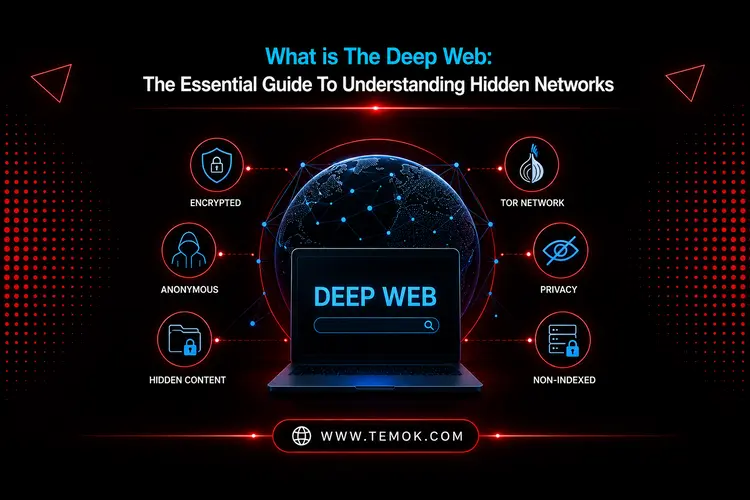

What is the Deep Web? The Deep Web is the part of the internet that search engines like Google cannot index, including password-protected pages, private databases, banking portals, medical records, and internal company systems.
Key Takeaways
- The Deep Web is large and not entirely accessible by the best search engines, such as Google or Bing.
- It contains unindexed pages, private databases, and fee-for-service websites, providing more information than the surface web.
- The Deep Web protects privacy by limiting access to non-paying users and is required for safe financial transactions.
- Critics believe that it undermines the internet’s inclusive principle by imposing restrictions on obtaining information.
- The dark web, a minor subset of the Deep Web, frequently involves unlawful activity but also provides legitimate users with privacy.
Introduction
Most people have heard of the legendary dark web, but what exactly is the Deep Web used for? The Deep Web refers to core areas of the internet that regular search engines are unable to access, such as pages that require login credentials, including a username and password, or internal enterprise networks. It could end up difficult to determine whether this non-searchable portion of the internet is secure or not, so we’re here to assist you with this all-in-one guide.
Keep reading and exploring to learn a clear definition of Deep Web and how to get to the Deep Web safely without being exposed.
Definition Of Deep Web
The Deep Web refers to a section of the World Wide Web that standard search engines cannot discover. This contains content behind password-protected logins, dynamic websites created in real time, and encrypted networks.
The phrase “Deep Web” refers to portions of the internet world that are not indexed by normal search engines such as Google, Bing, or Yahoo. Unindexed areas of the internet include dynamic material, password-protected websites, databases, and anything else that requires certain permissions or protocols to see.
What is The Deep Web Used For?
Deep Web information is usually legal and noncriminal, accounting for almost 90% of all websites. The Deep Web contains blog postings under review, pending website redesigns, and practically all financial information.
The Deep Web exists to preserve privacy and user information, and it is typically secure. Consider all the Deep Web pages that require logging in.
Examples of sites in the Deep Web include:
- Electronic bank statements
- Electronic health records
- The content of an email account
- Legal files
- Chat messages
- Private social media content
- Paywalled websites (such as news and educational research sites)
- Fee-for-service websites (such as subscription-based streaming movie and television services)
- Databases
- Internal networks for businesses, schools, and governments
Let’s now discuss what is the Deep Web vs dark web difference.
Deep Web vs Dark Web: The Reality

The Deep Web refers to any part of the internet that search engines do not index, and it accounts for about 90% of all online material. The Dark Web is a secret and encrypted sector of the Deep Web, accounting for roughly 6% of all online material.
“Deep Web” & “dark web” are not synonymous words. Although the Deep Web encompasses the whole dark web, the Deep Web itself is not part of the dark web.
Here is a quick Deep Web vs dark web comparison table for you to do so that you can better understand the core difference between the two:
| Factor | Deep Web | Dark Web |
|---|---|---|
| Definition | Search engines do not index private internet content | Hidden network accessed through anonymity tools |
| Accessibility | Requires login credentials or subscriptions | Requires Tor or specialized browsers |
| Search Engine Visibility | Not visible on Google or Bing | Completely concealed from traditional search engines |
| Main Purpose | Secure access to private data and services | Anonymous communication and hidden activities |
| Common Examples | Emails, banking portals, cloud storage | .onion sites, anonymous forums, whistleblower platforms |
| Security Level | Generally safe and encrypted | Anonymous but riskier due to scams and malware |
| Size | Makes up most of the internet | A very small portion of the Deep Web |
| Legality | Mostly legal and commonly used | Contains both legal and illegal content |
Also Read: Deep Web vs Dark Web: Powerful Breakdown of Hidden Internet Layers
What Are The Advantages of Using the Deep Web?

The Deep Web encompasses common services such as online banking, subscription portals, internal corporate systems, and private communication platforms, which we use all the time but do not find on Google.
Here are the major advantages of what is the Deep Web:
Privacy Protection
Unlike the surface web (open web), search engines do not index the Deep Web. Many Deep Web services include extra levels of encryption and access limitations, making it extremely difficult for third parties to trace user behavior. This is particularly useful for:
- People are aiming to restrict digital tracking and spying.
- Researchers access sensitive academic databases.
- Employees working in secure corporate environments.
Increased Security For Sensitive Data
Deep web services operating in the Deep Web use advanced security systems, which include complex authentication methods and encryption techniques to protect sensitive personal and financial data of their users. These measures decrease exposure to:
- Credential theft
- Malware Injection
- Unauthorized data scraping
- By design, the Deep Web limits the chances for public-facing assaults.
Free Expression in Restricted Environments
The Deep Web might be a lifeline in nations with strong internet control. Specific platforms enable people to:
- Share thoughts and news anonymously.
- Register in open forums with pseudonyms.
- Access unfiltered educational and political content.
Secure And Anonymous Communication
Deep Web-based solutions, such as encrypted email services, collaborative portals, and anonymous chat applications, provide privacy-focused alternatives to conventional platforms. These are often utilized by:
- Human Rights Organizations
- Legal practitioners handle delicate cases.
- Businesses manage secret intellectual property.
Many of these sites employ end-to-end encryption and do not keep user records, which lowers the danger of exposure.
Access to Specific Knowledge and Resources
Not all important stuff exists on the surface web. The Deep Web hosts:
- Academic databases (such as JSTOR and LexisNexis)
- Scientific Research Repository
- Private Collections and Archives
Let’s now discuss the drawbacks of Deep Web while understanding what is the Deep Web deeply.
What Are The Disadvantages of Using Deep Web?

While accessing the deep web has useful advantages, there are some potential drawbacks also which you must consider. Here are some of the severe disadvantages of accessing the deep web:
Illicit Activities
One of the most commonly known disadvantages of the Deep Web is its association with illegal activities like arms dealing, drug trafficking, and many other forms of cybercrime. The anonymity the Deep Web provides can facilitate these activities, making it more difficult for law enforcement agencies to track down perpetrators.
Lack of Regulation
Unlike the surface web, which is indexed by search engines and subject to some degree of oversight and regulation, the Deep Web operates mainly outside the traditional control mechanisms. The absence of regulation on the Deep Web can result in the proliferation of harmful content, including but not limited to extremist propaganda and misinformation.
Privacy Concerns
While deep internet searches allow anonymity, which may be useful for safeguarding privacy and free expression, it also provides an environment in which malevolent actors can operate without fear of penalties.
This can jeopardize people’s privacy and security since personal information can be purchased and sold on underground marketplaces.
Difficulty in Accessing Information
Accessing content on the Deep Web frequently requires specialized software and knowledge because traditional search engines do not index it.
This may render it unavailable to the typical internet user and impede the distribution of vital information hidden within the Deep Web.
Potential for Exploitation
The Deep Web’s anonymity and lack of monitoring can make it an ideal environment for abuse, including human trafficking, child exploitation, and other types of exploitation. This can have serious effects for vulnerable people who become targets of such actions and are misunderstood as to what is the Deep Web.
Risk of Malware and Cyber Attacks
Navigating the Deep Web puts users at risk of encountering malware, phishing schemes, and other cyber risks.
Because several Deep Web services operate outside of the law, victims of cybercrime have few options, and hostile threat actors can exploit vulnerabilities for financial gain or harm.
Also Read: Safe Web Browsing: Defending Against Phishing Attacks
Is The Deep Web Legal And Safe?
A prevalent myth is that the Deep Web is illegal or dangerous. In actuality, the Deep Web is a common and necessary component of the internet.
- Legality: Accessing and utilizing the Deep Web is entirely legal in most countries, as it contains common services like email, banking, and private databases.
- Safety: The majority of Deep Web content is secure due to authentication methods, encryption, and access limitations in place.
- Where risks exist: Risks are most commonly connected with the dark web, where anonymity may sometimes facilitate illicit activity or expose users to hazardous information.
Also Read: What is The Dark Web: Smart Insights Into Myths, Risks, and Anonymity
How To Access The Deep Web Safely?
In the last section on what is the Deep Web, here are some suggestions for securely surfing the Deep Web:
- Use a safe, up-to-date browser. Use respected, privacy-focused examples of web browsers such as Firefox with security add-ons or Tor (for black web access). Keep your browser up to date.
- Avoid clicking on unfamiliar or dubious links. Stick to the confirmed URLs. Random links, particularly those published in forums or chat rooms, might lead to dangerous websites or phishing pages.
- Use a Virtual Private Network (VPN). A VPN encrypts your communication and masks your IP address, providing further privacy and safeguarding you from tracking or spying. Check out Temok VPN services to remain safe and secure while surfing the deep web.
- Never disclose personal information. Even if a website appears to be authentic, do not submit personal information such as your real name, email address, or financial information.
- Use strong, unique passwords. Always apply complex passwords and use a password manager. Avoid repeating login credentials across various platforms.
- Keep antivirus and security tools active. Enable reliable antivirus and endpoint security to detect malware or unauthorized downloads in real time.
- Be cautious when downloading any files. Don’t download files from untrusted sources. Many downloads from the Deep Web may contain hidden malware, trojans, or ransomware.
- Examine site URLs carefully. Typos, odd characters, or “.onion” sites not provided by credible sources may be traps. Before continuing, ensure the validity of the website.
- Use encrypted communication technologies. For further security, utilize end-to-end encrypted technologies such as WhatsApp or Signal while communicating.
FAQs (Frequently Asked Questions)
Is The Deep Web On Google?
No, standard search engines such as Google do not index the deep or black web; you cannot reach them.
Is It Illegal To Browse The Dark Web In The US?
No laws exist in the United States prohibiting individuals from using the dark web. Under US legislation that defends freedom of expression and online privacy rights, dark web access, which requires users to employ certain tools like the Tor Browser, remains a legal activity.
How Did My SSN Get On The Dark Web?
Your Social Security Number (SSN) most likely became available on the dark web as a result of a large-scale data breach involving a corporation, organization, or government agency that held your information.
What’s The Difference Between A Deep Web And The Dark Web?
The key difference is that the Deep Web refers to any material that search engines do not index (e.g., email, banking). In contrast, the dark web is a limited, encrypted, and purposefully concealed part of the Deep Web.
Conclusion
Non-indexed websites, premium sites, hidden databases, and the black web are all part of the Deep Web, which exists outside of normal search engines.
It improves privacy and secures access to sensitive data, but it has been criticized for lowering transparency and facilitating illegal behavior. The dark web is a minor and sometimes misunderstood subsection of the Deep Web. Access is lawful, but exploitation of its contents is not. Therefore, understanding what is the Deep Web used for and how to get to the Deep Web is necessary. In this blog, we’ve discussed what is deepweb “the hidden web,” Deep Web search engine optimization, and accessible sites in the Deep Web.